 During the last three years, we’ve traveled through the wee town of San Francisco Pichátaro several times driving between Pátzcaro and Paracho. I’ve taken blurry photos on the run of intriguing carved wood pillars and furniture displayed outside rustic workshops; we’ve been stuck in two-way truck traffic on the narrow roadway, and were once delightfully slowed to a crawl in the midst of costumed, waving, laughing people during a twilight carnival event. We considered picking up our dinner produce from street vendors…


…but we never did, because we never stopped.
This year, driving back from Paracho, we passed the small church on the right that seems unfinished but is in use anyway, then approached the large modern-faced church directly across the plaza from the road. For the first time, I got a good look at an older church to the left of the new one, behind a government building. Hmmm, intriguing.

Two weeks later, after Chuck and I and Terri and Tuck picked up my repaired mandolin in Paracho, we said…Let’s stop! And, we did.
I think everyone should! The church is a gem! The town is interesting!

 Templo San Francisco de Asís is very old, judging by crumbling exterior mortar and the construction styles within. The date 1895 is carved high on the church face, but because we’ve seen many churches that are inscribed with several dates marking multiple renovations, it’s hard to bet whether this is the actual date…or not! As we entered the courtyard, a boy was ringing the bells for the afternoon service. We followed the early arrivals into the church, past the choir boy statue at the entrance.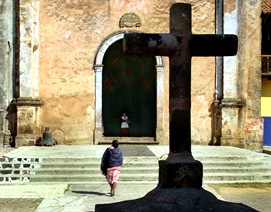
The church interior is lovingly cared for. The traditional, beautifully painted curved ceiling has the slatted structure used in churches built in the 15th-16th century. The blue walls and stenciled flowers look recently painted, but are well integrated with the temple design. It would be fascinating to compare old interior pictures, if they exist! Maybe we should ask around next time.


New additions, such as the lovely large paintings in carved wood frames, have been carefully selected and beautifully executed. Peek into the dim recesses of the confessional, and see the baptismal room with its old stone font and painting!


Suddenly, altar boys and the priest strode in with smoldering censers, and women in dark rebozos moved into the pews. It was a small congregation. We sat down and watched smoke fill the church.

Then we moved out into the town plaza. Which way to go first?


Strolling the street as the sun grew lower, we saw Pichátaro homes that proudly incorporate highly carved traditional construction. Below is a second floor residence balcony. It was fun to browse the low tech shops and see high quality work! We saw no painted pieces – but you could color these to your own design. We also saw lovely embroidered blouses for sale.


I’ve often wondered…what are the round, green, somewhat soft fruits next to the guavas?


Yes, there is a lot to contemplate in San Francisco Pichátaro!
To find out much more about Pichátaro woodwork and about forest protection and loss in this region of Michoacán, check out the very fine Mexico Cooks! Pichátaro blog.


